
.png)
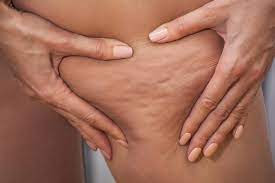
Cellulite is the formation of lumps and-- dimples in the skin. It can be found in both men and women, but it is more common in women. Around 80-90 percent will experience cellulite at some point in their life.
Grade 1
Orange-peel appearance and slightly draped or sagging skin
Grade 2
medium depth depression, a cottage cheese appearance, and moderately sagging skin
Grade 3
Very deep depression, a mattress appearance, and severely sagging skin.
Hormonal Factor and age
Hormones likely play an important role in cellulite development. noradrenaline, thyroid hormones, and prolactin are part of the cellulite production process.
One theory is estrogen decreases in women during menopause, blood flow to the skin decreases. This low circulation means less oxygen and low collagen production. Fat cells enlarge as well. The above factors make fat deposits more visible. The fat under the weakened connective tissue causes the dimpling effect. Aging skin is more likely to sag increasing the chance of cellulite developing.
Lifestyle Factors
Healthy eating will reduce cellulite.
smoking not exercising wearing tight clothing restricts blood flow.
Treatment and removal
The American Academy of Dermatology (AAD) has reviewed several techniques that may be successful in reducing the appearance of cellulite by breaking up the bands of connective tissue under the skin’s surface.
Acoustic wave therapy uses a hand-held device to transmit sound waves. It may work, but it can take several sessions.
Laser treatment may improve the appearance of cellulite for a year or more. It involves inserting a very small laser probe under the skin.
The laser is then fired, breaking up the tissue. This can also thicken the skin by increasing collagen production. The thickened skin may reduce the appearance of the cellulite below.
Subcision involves a dermatologist putting a needle under the skin to break up the connective tissue bands. Results can last 2 years or more, says the AAD.
Vacuum-assisted precise tissue release cuts the bands using a device containing small blades. As it cuts the connective bands, the tissue underneath moves up to fill the space under the skin, removing the appearance of cellulite. This may last for 3 years, but data on its success is limited.
Carboxytherapy involves inserting carbon dioxide gas under the skin. Side effects include bruising and discomfort after the procedure, but some cellulite might disappear.
Endermologie involves a deep massage with a vacuum-like device that lifts the skin. The United States (U.S.) Food and Drug Administration (FDA) have approved it as safe, but there is little evidence that it works, says the AAD.

Ionithermie cellulite reduction treatment involves covering the affected area with a special mud or clay, then wrapping it in plastic before applying an electric current. It is not proven to be effective.
Radiotherapy aims to reduce cellulite by heating it, but any results are short-term.
Laser-assisted liposuction removes small amounts of fat, but this may make dimpling worse. Research has not yet shown that it works to reduce cellulite.
Ultrasonic liposculpting targets and destroys fat, but again, research is lacking to show that it works.
Techniques that the AAD does not recommend include cryolipolysis, which freezes fat, mesotherapy, which involves injecting a mixture of substances under the skin.
Medications and creams
Some medications and creams have been proposed because they act on fatty tissues.
Caffeine dehydrates cells, making them less visible. This needs to be applied daily. Various caffeine creams for cellulite are available to purchase online
Retinol may reduce the appearance of cellulite by thickening the skin. At least 6 months’ use is needed to see results. It is important to try a patch test first, because some people have experienced adverse effects, such as a racing heart. Retinol treatments are available to buy online.

GET SHIRLIE'S RECOMMENDATIONS FOR DIMINISHING CELLULITE
Comments
Post a Comment